Tag: online

  • De Multi-Media Campagne bekend als Transmediale Marketing Campagne

    De Multi-Media Campagne bekend als Transmediale Marketing Campagne

    Je doelgroep kan je tegenwoordig bereiken op zeer veel verschillende platformen: TV | Online | Digital Bill-Board | Mobile | Print | Radio | en vele andere. Nu kunnen we ook Social Media | Video | Games | Blogs | Hub site en bijvoorbeeld een Online Media Campagne inzetten, met Affiliates en andere Partners naast de campagne om traffic te genereren.

    Voor de Merken die zijn doelgroep op het juiste moment wil bereiken met de goede boodschap is deze diversiteit met veel mogelijkheden om zijn advertentie campagne en media plan uit te werken een grote uitdaging.
    Deze mogelijkheden betekent voor merken dat ze goed gecoördineerd over alle platformen heen een diepere vorm kunnen uitzetten: Multi-Platform-Campagne en ook eerder bekend als Transmediale Marketing Campagne.

    Het voorbeeld van een goede Transmediale Marketing Campagne was destijds de verkiezings campagne van Barack Obama. Obama is de eerste president van Amerika die er in geslaagd is om met een Transmediale Campagne gekozen te worden. Nog nooit eerder waren er zoveel mensen wereldwijd die het nieuws volgde over Obama en zijn Verkiezings Campagne.

    We werden meegnomen door zijn verhaal “YES WE CAN” . Wij konden het verschil maken, niet hij of jij alleen, maar wij samen, als samenleving.
    Hij nodigde ons online uit om deel te nemen aan zijn verhaal en er persoonlijk deel van uit te maken. Tijdens zijn campagne maakte hij gebruik van een aantal kernwoorden: “YES WE CAN” en “HOPE”. En dit laatste woord is wat de Campagne van Obama Transmediaal maakt.

    Chris Hughes, bekend van Facebook nam ontslag bij Facebook en ontwierp de website MyBo. De website was het centrale punt binnen de campagne.

    MyBo motiveerde de bezoekers om Obama te steunen tijdens de verkiezingsstrijd. Als bezoeker was je na het aanmelden op jezelf aangewezen. Vergelijk het met Facebook: “Het zijn de bezoekers die Facebook groot maakte en niet Facebook zelf”.

    Daarnaast maakte het campagne-team gebruik van de kracht van de verschillende Social Media tijdens de campagne. Online overal vindbaar waar de doelgroep zich bevond op internet. Via sites zoals Facebook, LinkedIn, Twitter en MySpace wist Obama een gigantisch online netwerk op te bouwen, waarmee hij binnen een aantal seconden duizenden mensen online wist te bereiken die op hun beurt zijn boodschappen ook weer doorstuurden binnen hun eigen netwerken.

    Met het woord “HOPE” speelde Obama in de Social Media hier bewust op in. Iedereen kent Amerika als geen ander als het land van Hope en The American Dream. Hiermee kon Obama het ook overbrengen naar heel de wereld.
    Iedereen gaf hun eigen invulling aan het woord “HOPE”. En daarmee werden zij een nieuwe verteller binnen het verhaal van Obama. Ze raakte betrokken en zorgden ervoor dat het doorverteld werd en ze droegen het uit op hun eigen wijze in hun eigen netwerk.

    En dat is precies wat een goede Transmediale Marketing Campagne als doel en als kracht in zich heeft! Met de zogenoemde Bottom-Up strategie, Multi-Platform ingezet (Online en Offline) en Social Media op de juiste manier eraan toegevoegd.

  • How to Optimize Contact Forms for Conversions

    How to Optimize Contact Forms for Conversions

    Boost your contact form conversion rates, do you know of any other ways?

    As marketers and business owners you probably spend the majority of your marketing efforts driving traffic to your site. But you shouldn’t just focus on the top of funnel because the greater opportunity may lie with boost your conversion rates. And if you are able to boost your conversion rates, it will open up more opportunities for traffic acquisition channels that you once couldn’t afford.

    <

    How to Optimize Contact Forms for Conversions

  • Private banks Summary Social Media Report

    Private banks Summary Social Media Report


    Private banks and Wealth managers urgently need to develop social media and digital strategies that place responding to this global trend at the center of their policy-making.

    The Private banks under analysis are not close to an integrated, strategic approach towards social media for private clients. I strongly advise wealth managers to take social media more seriously.


    The Internet is changing from just an information platform to being a social network. It is now time to go further and attract followers with interesting and relevant content that is tailored to an audience of private banking clients.

    Only a minority of just 20% of the banks have effective strategies for targeting social media at wealthy clients in place and a significant number of them seem to have no social media strategy for this segment at all.


    First steps

    – to open up to social media

    – a presence in all relevant social media

    – keep presence active and lively


    Relevant content is an issue, as is keeping it up to date.

    Out of the 30 banks analyzed, 26 do not have relevant Twitter streams in more than one language. More than half of the banks under evaluation have a Twitter stream in place (67% for the full sample and 80% for the top-ten banks). But content is clearly the problem. More than half of the banks under review do not have private banking presences on LinkedIn and Facebook. Many banks are also plainly struggling to keep their social media content up-to-date with average scores of just 47%.

    Private Banks prefer to keep their expertise private, too. Wealth managers really only want to meet clients and prospective clients face-to-face. In addition, Private banks and wealth managers don’t have the right people to create effective social media.


    Facebook, Twitter, YouTube and LinkedIn are the most important social media worldwide in their respective areas as measured by members, activity or posted content. This is the reason they have chosen precisely these four networks as benchmarking.

    Instagram and Pinterest are two social networks that have specialized features, which I expect to become more important in the future.


    Link to mobile

    Mobile applications are not a social network or social medium in themselves but the use of mobile applications is clearly strongly interwoven with social media usage.


    Usage by wealthy segment

    An important trend for wealth managers to appreciate is that affluent or wealthy individuals use the general platforms like Facebook or LinkedIn most frequently, visiting niche platforms only occasionally.


    YouTube

    “Broadcast yourself” was the motto of YouTube. Being the biggest social video network worldwide, every bank or wealth manager should broadcast itself via YouTube to profit from the network effects of this platform. The importance of video content as a medium because of its near universal appeal has come about only over the last few years. In many ways, video content, in contrast to written content, is still under-used by many conservative corporations such as banks or wealth managers, especially when it comes to disseminating their expert analysis and comment. Yet, it is important to package the content in an entertaining and engaging format.


    Twitter

    Twitter is the global leader as a micro blogging service. Especially for transmitting news, quick commentary or other updates, Twitter has become an indispensable medium with the attribution of news stories to tweets now almost a daily occurrence. After Facebook, Twitter is today’s most influential social network medium. If tweets are too infrequent or lacking in interest, a stream will not collect a significant following.

    Facebook

    Broad-based social networks like Facebook are used to communicate with friends, relatives or neighbors but also to exchange opinions with strangers about a diverse range of topics. Professional networks like LinkedIn or Xing, are visited in order to find and re-connect to former coworkers,to expand one’s professional network and to identify potential new business partners. Although LinkedIn is seen primarily as being of interest to company staff, alumni and job hunters, LinkedIn presences can be an important source of information to wealthy clients and potential clients.


    Strategy

    Wealth managers urgently need a strategy for defining how they should respond in this interactive phase of the Internet’s development. This is necessary because, today, the Internet, with its fast increasing user statistics and interactive possibilities, is rapidly overtaking conventional media such as print, TV or radio as a channel of communication. Indeed, with the increasing importance of electronic editions of newspapers and TV and radio broadcasters’ blogs and Twitter streams coupled with the fact that news now happens on social media, the distinction between traditional and Internet media is on the point of losing relevance completely.


    Go local

    Go local with social media presences for your advisors: Localization is the most important future trend:

    social networks are always mirroring the real off-line world. Wealth management advice and transactions mostly happen on a local level. The advisors in local and regional branches are the people who are the personal interface to clients. It’s important to support local advisors with their own social media.

    An advisor, who succeeds in inviting clients to be his or her personal acquaintances on Facebook, or within the contacts of LinkedIn, has powerful new tools to stay connected to these clients.


    Other recommendations

    Focus on the general, broad platforms and a few niche communities: over the last few years only a small number of platforms have made it to become global leaders in the world of online communities. Every wealth manager should be present in these important social networks (Facebook, Twitter, LinkedIn and YouTube). In addition, a limited number of smaller niche communities should be targeted. The choice of which of these more specialized communities to make use of depends on the positioning of the bank.


    Stay informed about what competitors are doing and keep up with changes in fashion. Observe activity on your social media channels, Open communication should be the basic principle, Be original. Be engaged. Be authentic, Keep delivering your key messages for clients and potential clients and Learn from your mistakes.


    Have a dedicated (social media, online and mobile) team. With out it you can’t start and continuous sharing and engaging your target group with relevant content.


    In short the minimum you have to do

    – Provide social media presences in your local language and also in English.

    – Launch a private banking LinkedIn company presence.

    – Improve social media integration on the website. Link the the website to social media channels.

    – Think about dedicated wealth management presences on the other channels as well.

    Give visitors the opportunity to interact with and on the website.


    Read more about it in the Summary Social Media Rapport MyPrivateBankingResearch

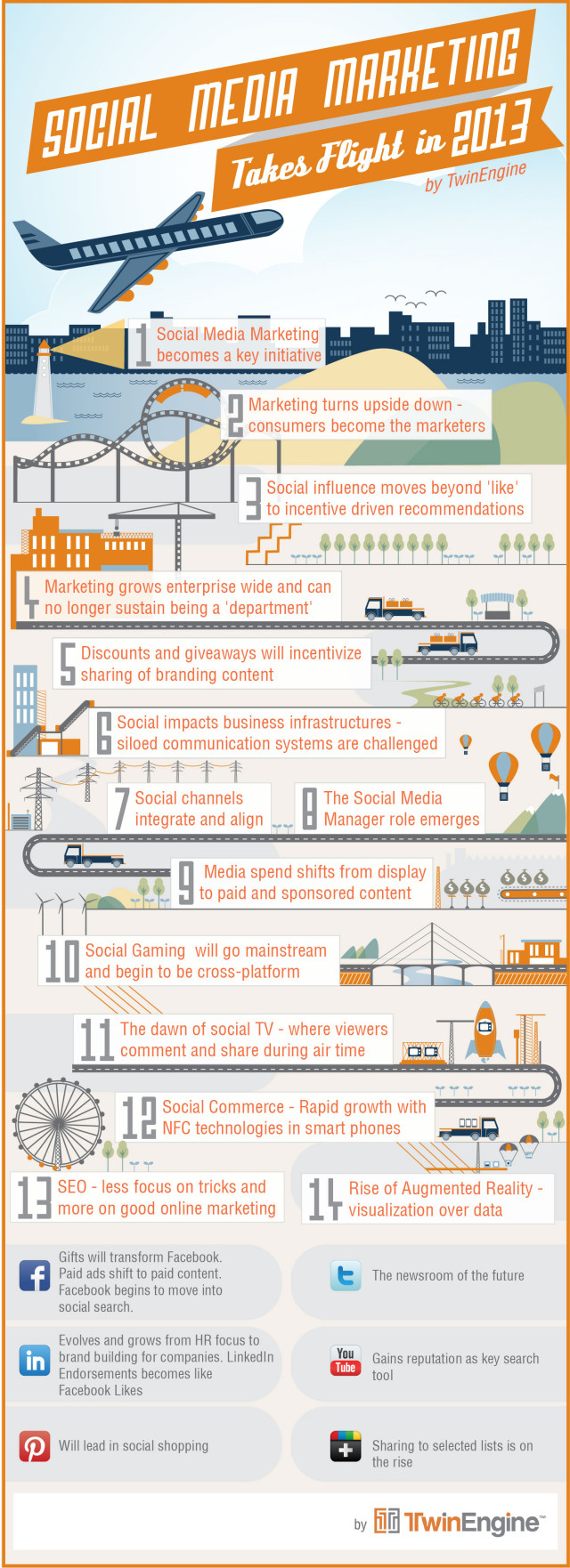
  • Online marketing in 2013, Less focus on tricks and more on good

    Online marketing in 2013, Less focus on tricks and more on good


    The online marketing topics to believe in 2013: “Authenticity and understanding needs of target audience drive engagement. Brands build online from quality content, interactions with influencers”

    Are you ready for what the new year will bring in online marketing? How do you know if your campaign is living up to its full potential? Is your website generating enough qualified leads to achieve your online sales and online marketing goals?

    Start building your online social marketing strategy! Online, Digital and Social Media Marketing will be key initiatives for companies in 2013.